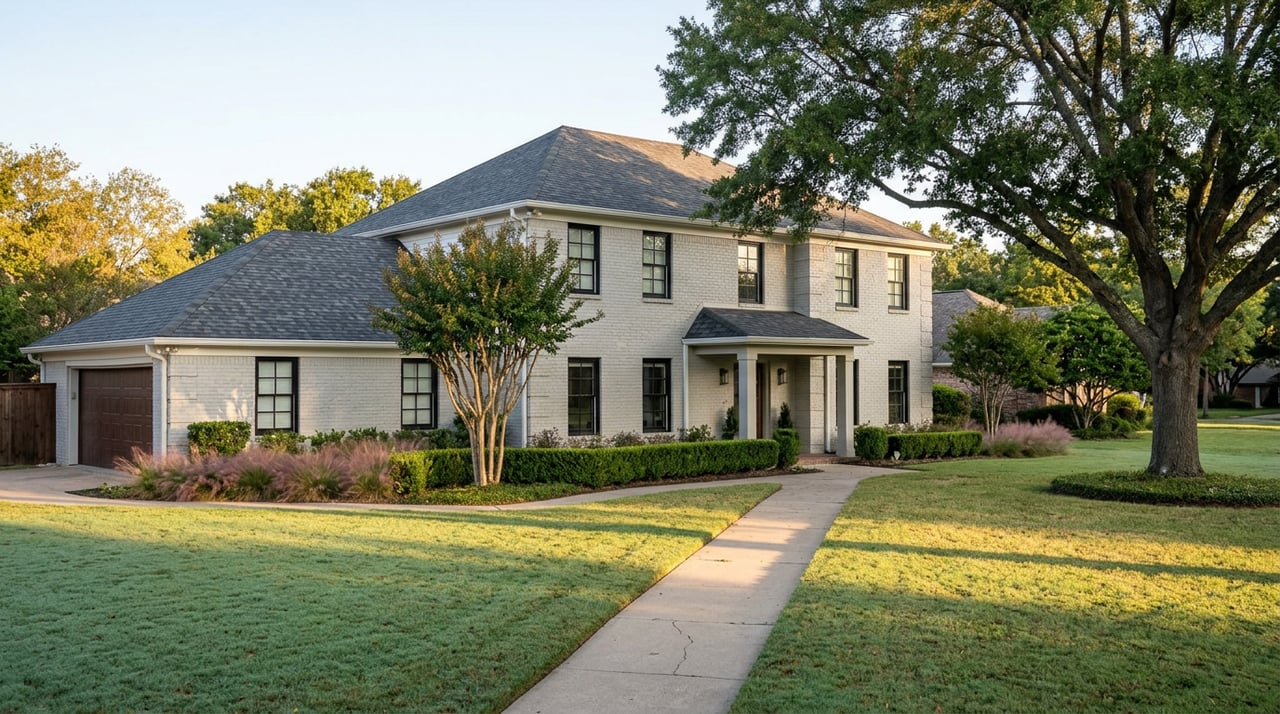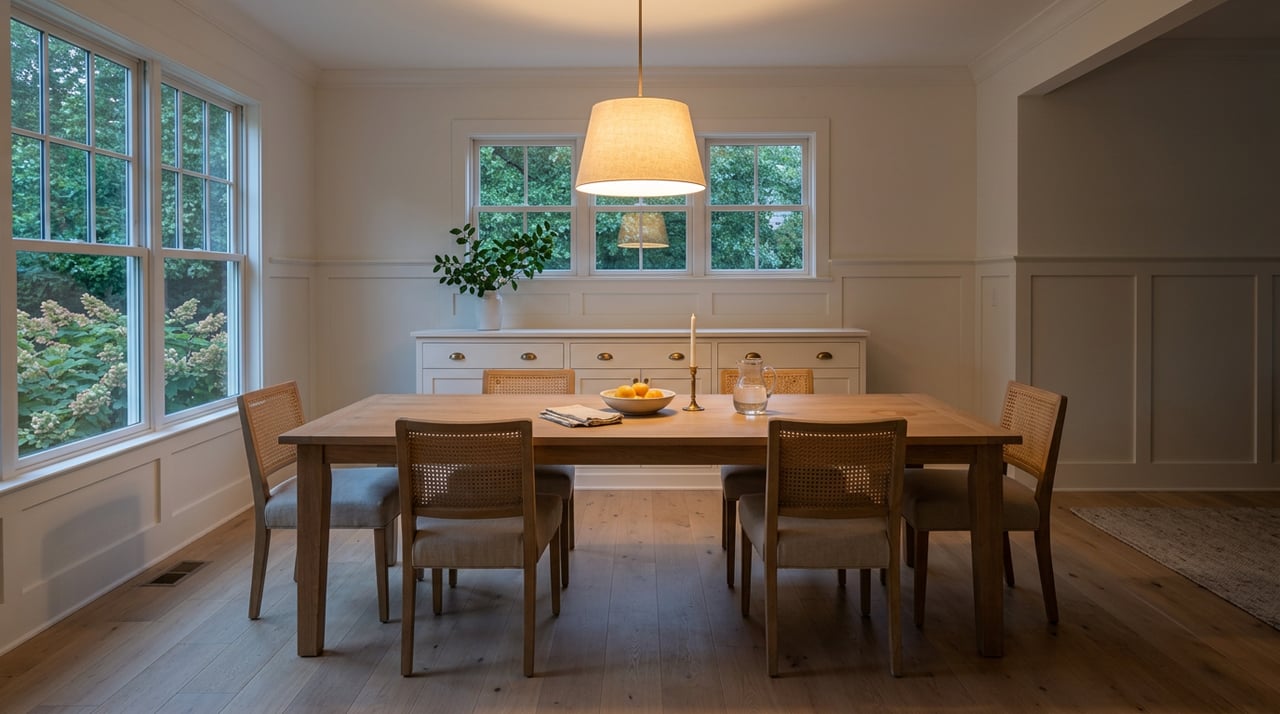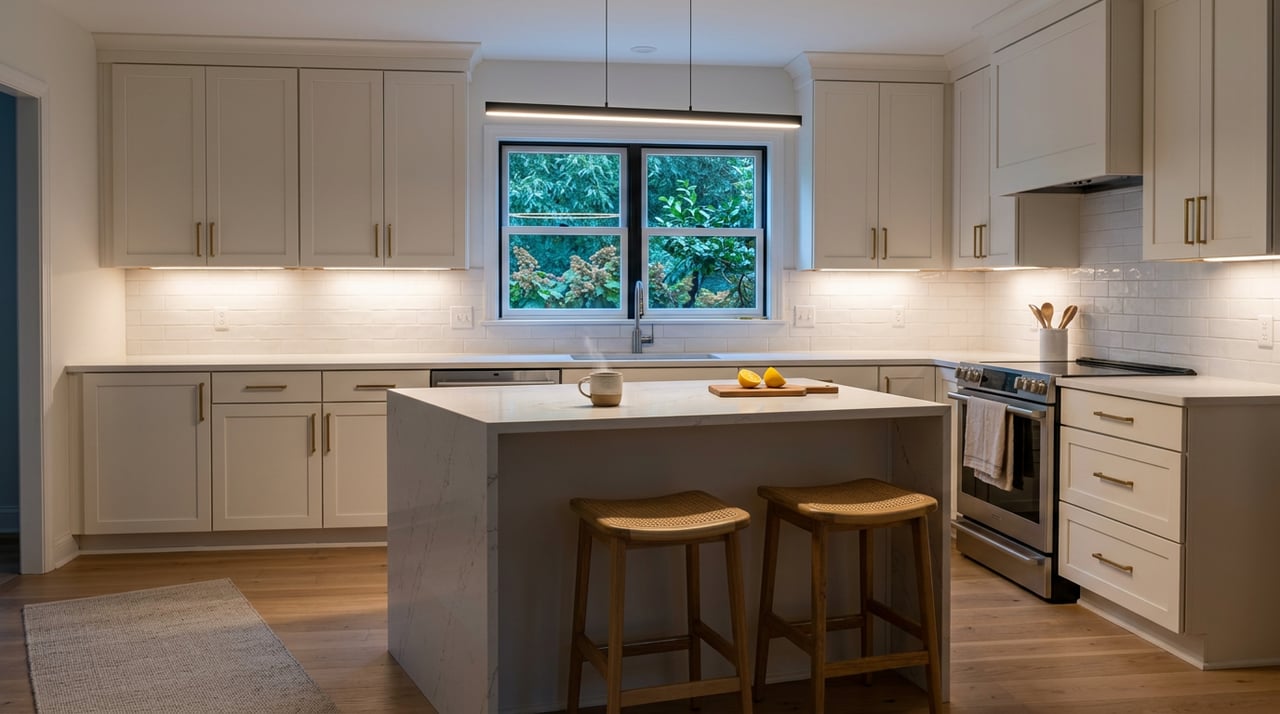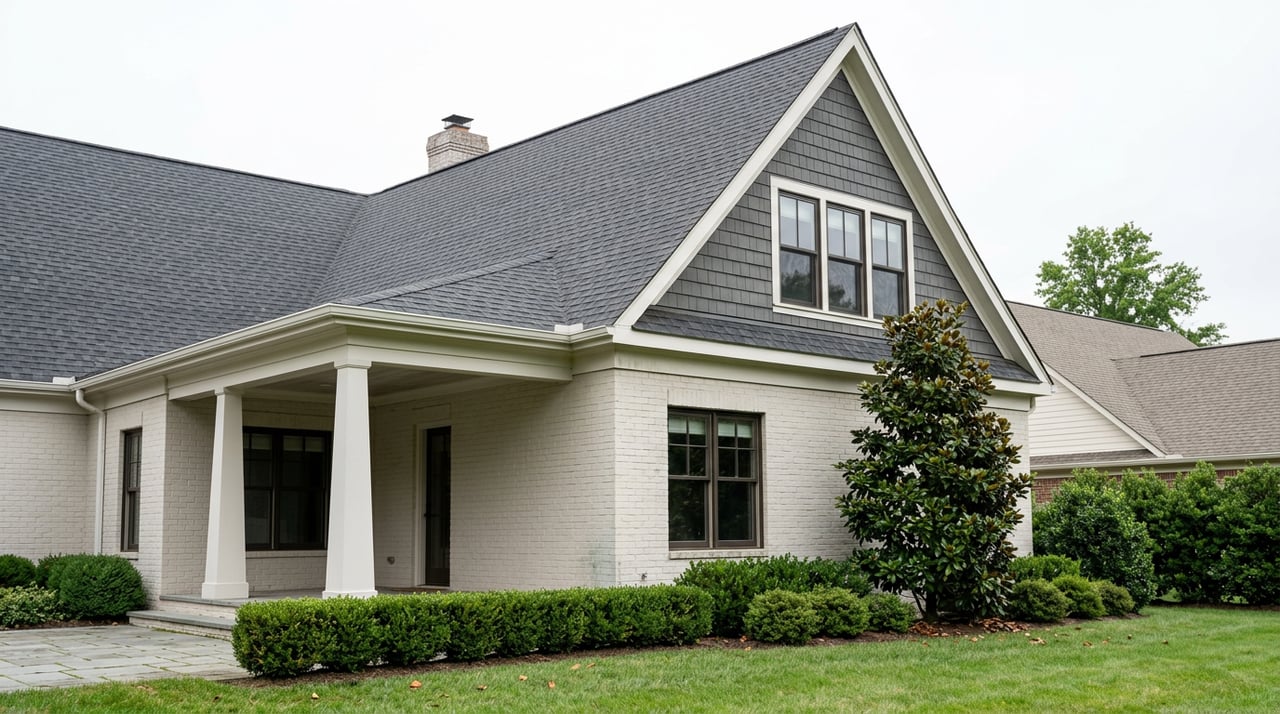
Walk down Watts Street in Trinity Park on a Sunday morning and you'll pass Queen Anne cottages with wraparound porches, century-old oaks, and a listing sign in front of a home asking well into seven figures. Everything about the block says protected. Preserved. Untouchable.
It isn't.
Trinity Park sits on the National Register of Historic Places, and that designation carries real prestige, but it carries almost no regulatory weight. A house there can be sold to a builder next month and demolished with a standard permit, no historic review required. Meanwhile, a smaller bungalow across town in Watts-Hillandale, priced in the mid $500,000s as of this summer, can't have its front porch repainted the wrong shade without a city sign-off first.
That inversion, expensive and unprotected on one side, more affordable and heavily regulated on the other, is the thing almost nobody explains clearly when you're comparing Durham's in-town neighborhoods. It matters more than the median price on the listing.
Three Words That Sound the Same and Aren't
Durham uses three different designations for older neighborhoods, and real estate marketing tends to blur them into one word: historic.
National Register status is honorific. It documents architectural and historical significance and can unlock certain maintenance-related tax credits for owners, but it places no restriction on what an owner does to the exterior of a house, and it offers no protection against demolition at all.
Local Historic District (LHD) status is a zoning designation. Once a neighborhood becomes an LHD, any exterior change, from a new roofline to a repainted door, needs a Certificate of Appropriateness from Durham's Historic Preservation Commission before a contractor can start. Durham currently has eight LHDs: Trinity Heights, Watts-Hillandale, Morehead Hill, Holloway Street, Golden Belt, Fayetteville Street, Downtown Durham, and Cleveland Street.
Neighborhood Protective Overlay (NPO) status sits between the two. It's a customized set of design rules a neighborhood petitions for outside the full LHD process. Only two Durham neighborhoods currently have one: Old West Durham and Tuscaloosa-Lakewood.
Trinity Park, despite being immediately adjacent to Trinity Heights and often marketed alongside it, has none of the last two. It's Register-only.
| Designation | What it requires | Durham examples |
|---|---|---|
| National Register | Nothing on exterior changes; may qualify owners for maintenance tax credits | Trinity Park |
| Local Historic District | Certificate of Appropriateness for any exterior change; up to a 1-year demolition delay | Trinity Heights, Watts-Hillandale, Morehead Hill, Holloway St., Golden Belt, Fayetteville St., Downtown Durham, Cleveland St. |
| Neighborhood Protective Overlay | Customized design rules, less formal than an LHD | Old West Durham, Tuscaloosa-Lakewood |
What the Lack of Protection Actually Feels Like
Trinity Park's own neighborhood association has spent years wrestling with this. The board first raised the question of pursuing LHD status back in March 2020, then returned to it at a follow-up meeting once in-person gatherings resumed. A resident at that later meeting raised the exact scenario that makes the gap real: an investor eyeing a well-kept, expensive house with plans to tear it down. One neighbor put it plainly:
"Even expensive houses are being sought for teardowns."
That's the mechanism buyers miss. A high price tag in Trinity Park doesn't signal safety from redevelopment, because nothing in the neighborhood's legal status stops a new owner from scraping a lot and building something taller, wider, or simply different from what's next door. The same freedom that lets a Trinity Park owner swap out windows or add a rear addition without asking the city applies just as fully to the builder next door.
Trinity Park listings this year have run from the $300s into seven figures, a wide spread that reflects both the neighborhood's architectural variety and the fact that teardown-and-rebuild economics are already part of how some parcels get valued. If you're buying there expecting the same predictability an LHD offers, you're buying something the designation was never built to provide.
What Full Protection Actually Costs You
Cross into Watts-Hillandale and the rules flip. As a Local Historic District, any exterior work, new windows, a porch rebuild, even repainting, needs a Certificate of Appropriateness before a contractor can pull other permits. That review adds time. It can add cost, since approved materials sometimes cost more than a standard hardware store swap. For an owner who wants to move fast on a renovation, it's friction.
It's also why the neighborhood's character has held together. Watts-Hillandale sits along Broad Street, close enough to walk to Watts Grocery and Joe Van Gogh, and within reach of Ninth Street's restaurant row, including Monuts for breakfast. Recent data through this summer put the neighborhood's median list price around the mid $500,000s, with homes typically under contract in about a month. One data source showed prices up modestly over the past year while another showed them down, which is less a contradiction and more a reminder that in a neighborhood this size, the median moves with whichever handful of houses happened to sell that quarter. The number worth trusting less than the designation behind it.
Even new construction inside Watts-Hillandale has to clear that same review. A recent four-home infill project near Westover Park, built by Center Studio Architecture in partnership with Brown Roots, paired new builds with one restored heritage home on the same lot, using materials meant to echo the park setting around it. That's what LHD review looks like when it works: new houses that still read as part of the block, not against it.
The Middle Ground Nobody Markets Well
Old West Durham's Neighborhood Protective Overlay splits the difference. It gives the neighborhood some say over new construction and major changes without the full weight of an LHD's Certificate of Appropriateness process for every exterior tweak. It's a reasonable answer for a neighborhood that wants some predictability without asking every homeowner to clear city review for a new front door.
If you're touring Old West Durham alongside Watts-Hillandale, ask your agent to confirm which set of rules applies to the specific parcel you're considering. NPO boundaries and LHD boundaries don't always match a neighborhood's informal name on a listing.
What This Means When You're Actually Comparing Blocks
If a fast, low-friction renovation matters most to you, and you're comfortable with the fact that your future neighbors have that same freedom, Trinity Park's lack of local designation might read as an advantage rather than a gap.
If predictability matters more, if you want confidence that the house next door won't become a three-story infill build five years from now, an LHD like Watts-Hillandale or Morehead Hill gives you something Trinity Park legally cannot: a process the city has to run before that change happens, and up to a year of delay built into any demolition request.
Neither answer is right for every buyer. But walking into either neighborhood assuming "historic" means the same thing in both places is the mistake that shows up during due diligence, not before.
A Few Questions Worth Asking Before You Write an Offer
How do I find out whether a specific address sits in an LHD, an NPO, or just on the National Register? Durham's public GIS mapping tool, Durham Maps, lets you look up a parcel and view any related Certificate of Appropriateness records tied to it. It's the fastest way to confirm a property's actual status rather than relying on how a listing describes the neighborhood.
Does National Register status come with any real benefit at all? Yes, just not the one most buyers assume. It can make a property eligible for certain maintenance-related tax credits. It does not require city review of exterior changes and does not protect against demolition.
What if I want to add an accessory dwelling unit to a historic property? Durham's Historic Preservation Commission covers ADUs as a recurring topic in the annual newsletter it sends to residents of local historic districts, which signals it's an active review category. If the property sits in one of the eight LHDs, plan on that addition going through the same Certificate of Appropriateness process as any other exterior change, not just standard building permits.
If you're weighing Trinity Park against Watts-Hillandale, Morehead Hill, or Old West Durham and want someone who can walk the actual designation status of a specific address before you fall in love with the porch, Triangle Style Living can help you compare the paperwork along with the property. Let me be your matchmaker. Schedule a consultation.