Wondering whether Wake Forest is the right place to level up your next home purchase? If you want more space, a more established daily routine, and a community feel that goes beyond a single subdivision, this town often lands on the shortlist for good reason. Wake Forest offers a mix of housing styles, strong park access, a walkable downtown core, and practical routes into Raleigh and other parts of the Triangle. Let’s dive in.
What Wake Forest feels like
Wake Forest is best described as a suburban town with a traditional neighborhood core. It is not fully urban, and it is not fully rural either. That middle-ground feel is part of what makes it appealing if you want a move-up home without giving up a sense of place.
The town’s development rules aim to support a balanced mix of uses, attractive residential areas, recreation options, and a pedestrian-friendly downtown. In practical terms, that means you can find neighborhoods with very different personalities depending on where you look. Some areas feel more established and traditional, while others reflect newer growth and more recent development patterns.
Why move-up buyers look here
If you are shopping for a move-up home, you are often looking for more than extra bedrooms. You may want better flow for daily life, more yard space, easier access to parks, or a town that gives you a stronger sense of community. Wake Forest stands out because it combines those lifestyle goals with a broader housing mix than many buyers expect.
The town includes established neighborhoods, newer subdivisions, and some denser downtown-adjacent housing. That variety matters because it gives you more than one path forward. You can focus on size, setting, convenience, or neighborhood character instead of forcing your search into one dominant subdivision style.
Housing options in Wake Forest
Neighborhood patterns vary
Wake Forest’s zoning includes low-density rural land as well as multiple residential intensities. District standards range from 1 unit per acre in Rural Holding areas to 3, 5, and 10 units per acre in other residential districts. For you as a buyer, that usually translates to a range of lot sizes, streetscapes, and neighborhood layouts.
Some parts of town lean toward larger lots and lower density. Other areas offer tighter neighborhood patterns, infill homes, or homes closer to the downtown core. That can be helpful if your move-up goals include more square footage but not necessarily the biggest parcel possible.
The housing mix is broader than one style
Wake Forest’s residential standards show minimum lot areas in roughly the 7,000 to 20,000 square-foot range for several residential uses. The code also allows denser infill forms like cottage courts and townhomes. That creates a more varied housing landscape than a town built around only one subdivision template.
For move-up buyers, this broader mix can open up more choices. You might find a newer home with a more traditional subdivision layout, or an established property in a mature neighborhood with different lot dimensions and streetscape character.
Historic areas shape the town’s character
Wake Forest also uses overlay and historic-district rules to help keep new work compatible with surrounding areas. The town’s historic districts include the commercial core and early residential streets. Supplementary design standards are intended to preserve the town’s unique visual character.
That does not mean every home search will center on historic areas. It does mean the town has a clear interest in protecting the look and feel of key places, which adds to the sense that Wake Forest has an identity beyond new construction alone.
Everyday life in Wake Forest
Parks and trails are a major draw
Wake Forest’s parks system is a meaningful lifestyle feature. The town manages 561 acres of parks, open space, natural land, and trails, along with more than 50 miles of developed and undeveloped greenway trails. If outdoor access matters to your household, that is a real plus.
These spaces can make daily life feel easier and more connected. Whether you want room for weekend walks, a place to get outside after work, or nearby recreation woven into your routine, Wake Forest offers more than a few isolated park sites.
Signature amenities support daily routines
E. Carroll Joyner Park covers 117 acres and includes a 32,000-square-foot community center. Holding Park is a five-acre site with the Wake Forest Community House and aquatic center. The town also has multiple neighborhood parks and trail connections.
For a move-up buyer, these kinds of amenities matter because they support day-to-day living, not just occasional outings. They add options for recreation, community use, and simple convenience close to home.
Downtown adds another layer
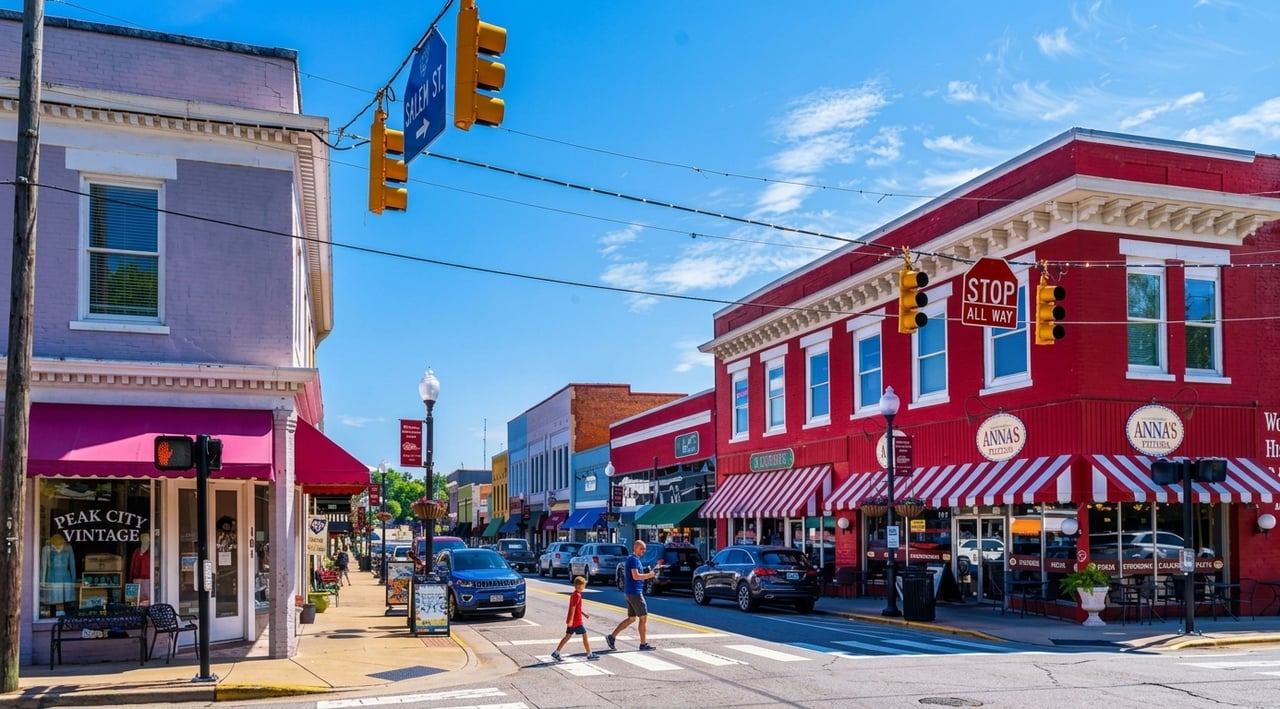
The Downtown and Renaissance Area covers about 220 acres in the heart of Wake Forest. That helps explain why the center of town can feel compact and connected even as the broader area continues to grow. You get the benefit of a town core without needing a fully urban setting.
Downtown Wake Forest is described as a walkable destination for local retail, dining, entrepreneurship, arts, culture, and community events. If you like the idea of having a recognizable town center for errands, dining, or local events, that can be a big part of the appeal.
Commute and mobility in Wake Forest
Road access is practical
Wake Forest’s road network is built around US 1 and Capital Boulevard, NC 98 Bypass and Dr. Calvin Jones Highway, and South Main Street and US 1A. Many of the major thoroughfares are maintained by NCDOT. That road structure plays a big role in how residents move through town and connect to the rest of the Triangle.
The town lists approximate access times of 5 minutes to North Raleigh via US 1, 35 minutes to Downtown Raleigh via US 1, 30 minutes to RTP via I-540, 20 minutes to Durham via NC-98, and 40 minutes to Chapel Hill via I-540. These are best used as directional guides rather than guarantees, but they help frame how Wake Forest fits regional commuting patterns.
Transit options add flexibility
Wake Forest also offers more mobility options than some buyers expect from a suburban town. Go Wake Forest microtransit provides local door-to-door trips. The Wake Forest-Raleigh Express is a weekday express bus connecting Downtown Wake Forest, Triangle Town Center, and Downtown Raleigh.
If your household has different schedules or commuting needs, those options can add flexibility. Even if you still drive most of the time, it can be helpful to know there are alternatives built into the local transportation picture.
How Wake Forest compares nearby
Move-up buyers often compare Wake Forest with other Triangle towns before making a decision. Looking at nearby options helps clarify where Wake Forest sits in the market.
| Town | Median owner-occupied home value | General takeaway |
|---|---|---|
| Wake Forest | $474,500 | A middle-lane option with a town center, parks, and varied neighborhoods |
| Rolesville | $535,000 | Growing community with small-town focus and breathing room |
| Apex | $576,100 | Strong historic-downtown identity and extensive parks and greenways |
| Cary | $580,200 | More mature suburban market with long-running greenway emphasis |
Based on these figures, Wake Forest often looks like a middle-lane choice. It can offer a more established and amenity-rich feel than a purely growth-stage town, while still coming in below some of the Triangle’s more mature suburban markets on this broad value measure.
Who Wake Forest fits best
Wake Forest can be a strong fit if you want a larger home in a town with a real downtown, substantial park and trail access, and multiple commute options to Raleigh and RTP. It also makes sense if you value neighborhood variety and want choices between established areas, newer subdivisions, and downtown-adjacent housing.
It may be a weaker fit if you want a dense urban lifestyle. It may also be less ideal if your top priority is the largest rural-style parcel, since the town’s overall pattern is still anchored in suburban and small-town planning. That is why your ideal fit depends less on price alone and more on how you want everyday life to feel.
Questions to ask yourself
Before deciding whether Wake Forest is right for your move-up home, ask yourself a few simple questions:
- Do you want more space without giving up access to a town center?
- Would parks, trails, and community amenities improve your daily routine?
- Are you looking for a town with both established neighborhoods and newer housing options?
- Do Wake Forest’s general commute patterns align with where you need to go most often?
- Are you aiming for a suburban setting with character rather than a fully urban or fully rural environment?
If you answer yes to most of those, Wake Forest may be worth a closer look.
The best move-up decision is not just about getting a bigger house. It is about finding the right fit for your next season of life, your routines, and the kind of community experience you want around you. If Wake Forest is on your radar, a neighborhood-by-neighborhood strategy can help you narrow down which part of town fits you best.
If you want help comparing Wake Forest with other Triangle options or narrowing your search to the right neighborhood feel, Renee Rogers would love to help you make a confident move.
FAQs
Is Wake Forest a good place for a move-up home?
- Wake Forest can be a strong choice if you want more space, a suburban setting with a real downtown, significant park and trail access, and practical connections to Raleigh, RTP, and other parts of the Triangle.
What kinds of homes can you find in Wake Forest?
- Wake Forest offers a mix of established neighborhoods, newer subdivisions, and some denser downtown-adjacent housing, with residential patterns that range from lower-density areas to tighter neighborhood layouts.
How walkable is Downtown Wake Forest?
- Downtown Wake Forest is described by the town and downtown organization as a walkable destination for local retail, dining, arts, culture, entrepreneurship, and community events.
What are commute options from Wake Forest?
- Wake Forest is oriented around major roads like US 1, NC 98, and US 1A, and it also offers Go Wake Forest microtransit plus the weekday Wake Forest-Raleigh Express bus.
How does Wake Forest compare with Apex or Cary for move-up buyers?
- On median owner-occupied home value, Wake Forest sits below Apex and Cary, which can make it feel like a middle-lane option for buyers seeking neighborhood variety, amenities, and a town-center feel.
Does Wake Forest offer parks and greenways?
- Yes. Wake Forest manages 561 acres of parks, open space, natural land, and trails, along with more than 50 miles of developed and undeveloped greenway trails.